On This Page
"Dreaming of Jakarta's sunny shores? May is the sweet spot for beach weather. Come hungry—the local cuisine is unforgettable."
We built this guide using recent climate data, hotel price trends, and our own trips, so you can pick the right month without guesswork.
Why Visit Jakarta?
Jakarta, the pulsating capital of Indonesia and Southeast Asia's largest metropolis (pop. ~11 million city, ~35 million Greater Jakarta/Jabodetabek), overwhelms and rewards in equal measure—a sprawling, chaotic, fascinating megacity where gleaming skyscrapers rise above kampung villages, centuries-old Dutch colonial warehouses face the Java Sea, and some of the best street food on the planet costs less than $1.18 / Rp19,882 per dish. Straddling the northwestern coast of Java, Jakarta has been a trading hub for over 500 years, first as the Sunda Kingdom port of Sunda Kelapa, then as the Dutch East Indies capital Batavia (1619–1949), and now as the political and economic heart of the world's fourth most populous nation and largest Muslim-majority country.
Kota Tua (Old Town) preserves the Dutch colonial legacy with the imposing Jakarta History Museum in the former City Hall (1710), Fatahillah Square's European-style architecture, the Maritime Museum in a former VOC (Dutch East India Company) warehouse, and the atmospheric Café Batavia (housed in an early-1800s building) overlooking the square. Istiqlal Mosque, the largest in Southeast Asia with capacity for 200,000 worshippers, stands directly across the street from Jakarta Cathedral—a deliberate symbol of Indonesia's religious tolerance and the nation's founding principle of Pancasila. The National Monument (Monas), a 132-meter marble obelisk topped with a gold leaf-covered flame, dominates Merdeka Square (one of the world's largest city squares at ~1km²) and its observation deck offers panoramic views over the sprawl.
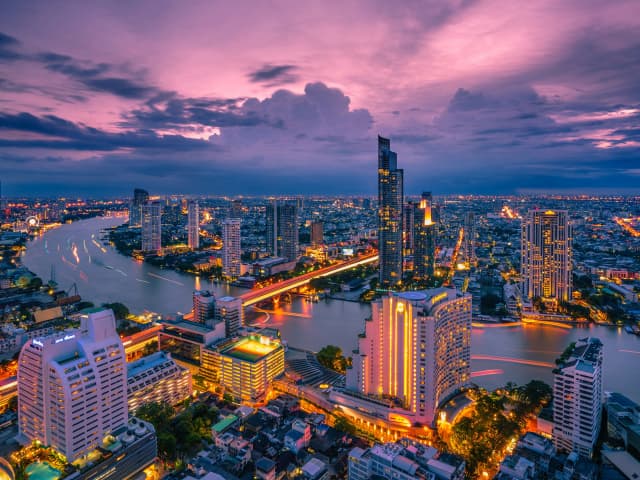
Jakarta's food scene is staggeringly diverse, reflecting the cuisines of Indonesia's 17,000+ islands: Padang restaurants serve fiery West Sumatran rendang and gulai on communal plates, Javanese warung dish out sweet-salty gudeg (jackfruit stew) and nasi goreng (the national fried rice dish), Betawi (native Jakartan) vendors sell soto Betawi (coconut milk beef soup) and kerak telor (spiced coconut egg crust), and Chinese-Indonesian kopitiam cafés serve nasi campur and bakmi (noodles) in Glodok, one of the oldest Chinatowns in Southeast Asia. The modern face of Jakarta gleams in the SCBD (Sudirman Central Business District) and Mega Kuningan tower clusters where rooftop bars, international restaurants, and mega-malls like Grand Indonesia and Plaza Indonesia cater to the city's growing middle class and expat community. Jakarta's traffic is legendary—ranked among the world's most congested cities—but the MRT (opened 2019) and LRT are expanding rapidly, transforming commutes along the north-south corridor.
The Thousand Islands (Kepulauan Seribu), a chain of tropical islands in Jakarta Bay, offer white-sand beach escapes reachable by speedboat in 1–2.5 hours—a surprising tropical getaway from the megacity. Visit during the dry season (May–September) for the most comfortable weather at 27–33°C (81–91°F), as the wet season (October–April) brings heavy monsoon rains and localized flooding. With Indonesia's economy booming, a new capital (Nusantara) under construction on Borneo, and Jakarta reinventing itself with new transit, waterfront redevelopment, and a world-class dining scene emerging alongside the legendary street food, this is a city in transformation—messy, electric, and utterly compelling for travelers willing to embrace the chaos.
What to Do
History & Landmarks
Kota Tua (Old Town)
Jakarta's Dutch colonial quarter centered on Fatahillah Square. Visit the Jakarta History Museum (former City Hall, 1710), Fine Arts & Ceramics Museum, and the Wayang (puppet) Museum. Rent a colorful bicycle to explore the cobblestone streets. Café Batavia (early-1800s building) on the square is atmospheric for a drink. Open Tue–Sun 09:00–15:00. Entry ~$0.59 / Rp9,941 per museum.
Istiqlal Mosque & Jakarta Cathedral
Southeast Asia's largest mosque (capacity 200,000) sits directly across from the neo-Gothic Jakarta Cathedral—a powerful symbol of Indonesia's religious pluralism. Istiqlal is open to respectful visitors of all faiths outside prayer times; modest dress required (free loaner robes available). The underground tunnel connecting the two sites symbolizes interfaith harmony.
National Monument (Monas)
The 132-meter marble obelisk crowned with a gold leaf-covered flame dominates Merdeka Square. Take the elevator to the observation deck for city-wide views. The basement museum covers Indonesia's independence struggle. Go early morning (08:00) to beat both heat and queues. Entry ~$1.77 / Rp29,823. Closed Mondays.
Food & Markets
Street Food Crawl
Jakarta's street food is world-class and absurdly cheap. Must-try dishes: nasi goreng (fried rice, ~$0.59–$1.18 / Rp9,941–Rp19,882), satay ayam (chicken skewers with peanut sauce, ~$1.18 / Rp19,882), soto Betawi (coconut beef soup, ~$1.77 / Rp29,823), martabak (stuffed sweet or savory pancake, ~$2.35 / Rp39,764), and kerak telor. Jalan Sabang near Monas is a legendary food street open until late. Pecenongan Street for Chinese-Indonesian late-night eats.
Glodok (Chinatown)
One of Southeast Asia's oldest Chinatowns with narrow lanes, red lanterns, traditional Chinese temples (Jin De Yuan, Dharma Bhakti), herbal medicine shops, and legendary bakmi (noodle) restaurants. Bakmi Gang Kelinci and Kopi Es Tak Kie are institutions. Visit morning for market energy and temple atmosphere. Combine with nearby Kota Tua.
Padang Restaurants
Restaurants serving West Sumatran cuisine line the city. Waiters bring dozens of small dishes to your table—you pay only for what you eat. Rendang (slow-braised spiced beef), ayam pop (poached chicken), gulai otak (brain curry), and sambal hijau (green chili relish) are staples. Sederhana and RM Padang Garuda are reliable chains. Expect $2.35–$4.71 / Rp39,764–Rp79,528 per person for a feast.
Modern Jakarta & Day Trips
SCBD & Mega-Malls
Jakarta's modern skyline centers on the SCBD and Mega Kuningan towers. Grand Indonesia and Plaza Indonesia malls offer luxury shopping, international dining, and escape from the heat. Skye bar (56th floor, BCA Tower) serves cocktails with panoramic sunset views. The malls double as social hubs—Jakartans treat them as parks.
Thousand Islands (Kepulauan Seribu)
A chain of 110+ tropical islands in Jakarta Bay, reachable by speedboat from Muara Angke or Marina Ancol (1–2.5 hours). Pulau Tidung and Pulau Pari are popular budget options with white sand and snorkeling. Pulau Macan offers eco-resort luxury. Book weekend boats ahead—they fill up. Day trips possible to closer islands.
Ancol Dreamland & Sunda Kelapa
The Ancol entertainment complex on the waterfront has Sea World (aquarium), beaches (modest by tropical standards), and Dunia Fantasi theme park. Nearby Sunda Kelapa, Jakarta's original 15th-century port, still operates with traditional wooden Bugis schooners (pinisi)—one of the most photogenic and historic sites in the city. Best visited early morning.
Gallery
Travel Information
Getting There
- Airports: CGK
- From :
Best Time to Visit
May, June, July, August, September
Climate: Tropical
Entry Requirements
Entry rules vary by passport
Check requirements| Month | High | Low | Rainy days | Condition |
|---|---|---|---|---|
| January | 30°C | 25°C | 27 | Wet |
| February | 30°C | 25°C | 27 | Wet |
| March | 31°C | 25°C | 28 | Wet |
| April | 31°C | 25°C | 25 | Wet |
| May | 32°C | 25°C | 20 | Excellent ((best)) |
| June | 31°C | 24°C | 19 | Excellent ((best)) |
| July | 31°C | 24°C | 13 | Excellent ((best)) |
| August | 32°C | 24°C | 11 | Excellent ((best)) |
| September | 32°C | 25°C | 14 | Excellent ((best)) |
| October | 32°C | 25°C | 19 | Wet |
| November | 31°C | 25°C | 25 | Wet |
| December | 31°C | 25°C | 26 | Wet |
Weather data: Open-Meteo Archive (2020-2025) • Historical avg. 2020–2025
Travel Costs
Per person per day, based on double occupancy. 'Budget' reflects hostels or shared accommodation in high-cost cities.
💡 🌍 Traveler Tip (February 2026): Best time to visit: May, June, July, August, September.
Practical Information
Getting There
Soekarno-Hatta International Airport (CGK) is 20km northwest of the city center. The airport train (KAI Bandara) to BNI City station takes 45 min (~$4.12 / Rp69,587). Damri airport buses to Gambir station ~$4.12 / Rp69,587 (1–2 hours depending on traffic). Grab/Gojek ride-hailing $8.24–$18 / Rp139,174–Rp298,230 (45 min–2 hours depending on traffic). Taxis: Blue Bird brand is reliable with metered fares ~$12–$21 / Rp198,820–Rp357,876. Avoid unlicensed taxis.
Getting Around
Traffic is Jakarta's defining challenge—among the world's worst congestion. The MRT (opened 2019) runs north-south from Lebak Bulus to Bundaran HI and is expanding. TransJakarta BRT buses cover the city on dedicated lanes (~$0.29 / Rp4,971/ride). Grab and Gojek (ride-hailing and motorbike taxis) are essential—motorbike ojek cut through traffic in minutes where cars take an hour. KRL commuter trains connect suburbs. Walking is difficult due to broken sidewalks and heat.
Money & Payments
Indonesian Rupiah (IDR, Rp). Exchange rate: $1 ≈ Rp16,892. Cards accepted at malls, hotels, and restaurants. Cash essential for street food, markets, small shops, and ojek. ATMs plentiful (BCA, Mandiri, BNI). Withdraw IDR only—avoid USD conversions. Tipping not mandatory but appreciated: round up restaurant bills, ~$0.35–$0.71 / Rp5,965–Rp11,929 for small services.
Language
Bahasa Indonesia is the official language. English is spoken in hotels, upscale restaurants, and malls, but limited in local warungs, markets, and taxis. Learn basic phrases: Terima kasih (thank you), Berapa? (how much?), Tolong (please). Google Translate works well. Grab/Gojek apps work in English and remove language barriers for transport.
Cultural Tips
Indonesia is the world's largest Muslim-majority country—dress modestly when visiting mosques and religious sites (shoulders and knees covered). Remove shoes before entering homes and some shops. Use your right hand for giving and receiving—the left is considered impolite. Bargaining is expected in markets but not in malls or restaurants. Friday afternoon prayer (12:00–14:00) means some businesses close briefly. Jakartans are warm and curious about foreign visitors.
Get an eSIM
Stay connected without expensive roaming. Get a local eSIM for this trip starting from just a few dollars.
Claim Flight Compensation
Flight delayed or cancelled? You might be entitled to up to $706 in compensation. Check your claim here at no upfront cost.
Perfect 3-Day Jakarta Itinerary
Colonial Jakarta & Old Town
Landmarks & Food
Islands or Neighborhoods
Where to Stay
Menteng / Central Jakarta
Best for: Tree-lined colonial streets, embassies, heritage houses, upscale dining
SCBD / Sudirman
Best for: Skyscrapers, rooftop bars, mega-malls, business hotels, modern Jakarta
Kota Tua / Old Town
Best for: Dutch colonial history, museums, Fatahillah Square, photography
Kemang
Best for: Expat dining, international restaurants, craft coffee, leafy residential
Popular Activities
Top-rated tours and experiences in Jakarta
Frequently Asked Questions
Do I need a visa to visit Jakarta?
What is the best time to visit Jakarta?
How much does a trip to Jakarta cost per day?
How many days do you need in Jakarta?
Is Jakarta expensive?
Is Jakarta safe for tourists?
What are the must-see attractions in Jakarta?
Why you can trust this guide

35+ countries • 8 years analyzing travel data
Independent developer and travel data analyst based in Prague. 35+ countries visited across Europe and Asia, 8+ years analyzing flight routes, accommodation prices, and seasonal weather patterns.
- Official tourism boards and visitor guides
- GetYourGuide and Viator activity data
- Booking.com and Numbeo pricing data
- Google Maps reviews and ratings
This guide combines personal travel experience with comprehensive data analysis to provide accurate recommendations.
Ready to Visit Jakarta?
Book your flights, accommodation, and activities