On This Page
"Dive into crystal-clear waters around Riviera Maya. February offers ideal underwater visibility. Lace up your boots for epic trails and stunning landscapes."
We built this guide using recent climate data, hotel price trends, and our own trips, so you can pick the right month without guesswork.
Why Visit Riviera Maya?
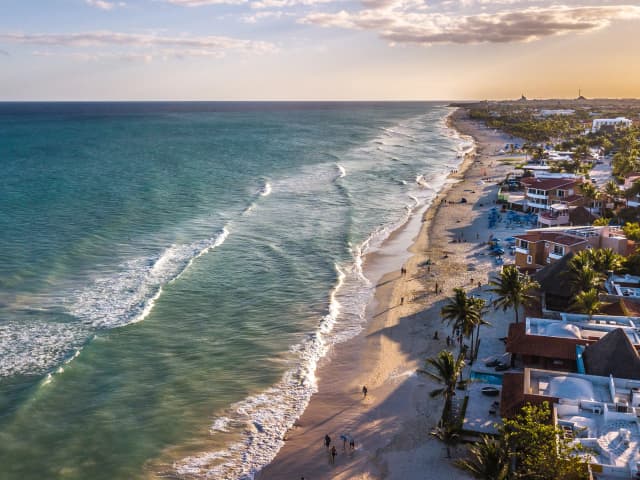
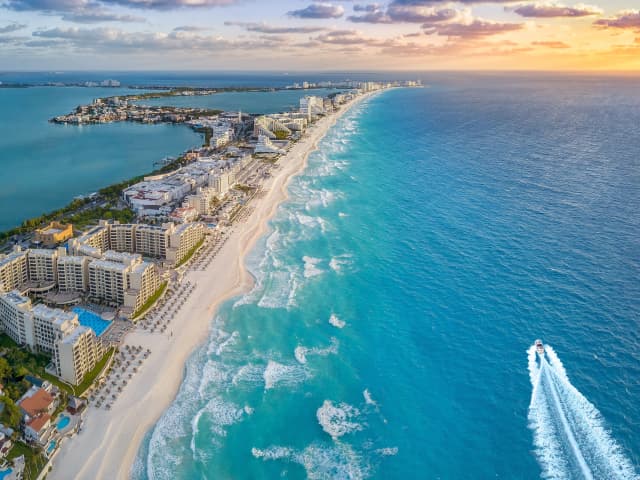
The Riviera Maya is a 120km stretch of Caribbean coastline running south from Puerto Morelos to the ancient cliff-top ruins of Tulum, encompassing one of the most geographically diverse tourism corridors in the Americas. Unlike a single city destination, the Riviera Maya is a mosaic of beach towns, jungle-draped archaeological sites, underground river systems, and marine reserves—each with a distinct character that rewards slow exploration over resort-bound idleness. The region sits on the Yucatán Peninsula's porous limestone shelf, which over millions of years has created an estimated 6,000–10,000 cenotes—freshwater sinkholes that served as sacred portals for the ancient Maya and now draw snorkelers and divers from around the world.
Gran Cenote, Cenote Dos Ojos, and Cenote Ik Kil are among the most celebrated, offering cathedral-like caverns of crystalline water illuminated by shafts of tropical sunlight, with visibility often exceeding 30 meters. Offshore, the Mesoamerican Barrier Reef—the second largest reef system on Earth after Australia's Great Barrier Reef—runs parallel to the coast, supporting spectacular snorkeling and diving at sites teeming with nurse sharks, sea turtles, eagle rays, and over 500 species of fish. At Akumal Bay, visitors can swim alongside endangered green and loggerhead sea turtles in their natural feeding grounds, an experience regulated to protect the animals but still remarkably accessible.
The ancient Maya left an extraordinary imprint here: Tulum's clifftop temples overlooking the turquoise sea form one of the most photographed archaeological sites in the hemisphere, while inland Cobá—set amid jungle lakes 47km northwest of Tulum—preserves the tallest climbable pyramid in the Yucatán, Nohoch Mul (42 meters), connected by a network of ancient sacbé (white stone roads) that once linked Maya city-states across the peninsula. South of Tulum, the Sian Ka'an Biosphere Reserve—a UNESCO World Heritage Site spanning 5,280 km² of tropical forest, mangroves, marshes, and marine habitat—shelters jaguars, manatees, crocodiles, and over 300 bird species, and can be explored by boat through its lagoon system or on guided fly-fishing expeditions across its pristine flats. The eco-parks of Xcaret and Xel-Há offer family-friendly immersion in the region's ecology, combining underground river floats, snorkeling coves, butterfly pavilions, and evening shows celebrating Mexican folklore—expensive at $94–$165+ / MX$1,625–MX$2,843+ per adult depending on package but genuinely well-executed and a full day's entertainment.
The climate is tropical with average temperatures of 27–33°C (81–91°F) year-round; the dry season from November through April delivers the clearest skies and calmest seas, while September and October bring the peak of Atlantic hurricane season. Budget travelers will find affordable guesthouses and hostels in Tulum pueblo and Puerto Morelos, while the corridor between Puerto Morelos and Akumal is dominated by large all-inclusive resorts—yet independent dining, craft mezcal bars, and Mayan cooking classes are easy to find for those venturing beyond the wristband. Colectivo minibuses run the length of Highway 307 for around $1.77–$3.53 / MX$30–MX$61, making it cheap and simple to hop between towns.
The Riviera Maya's singular appeal lies in this combination: world-class Caribbean beaches, a living ancient civilization's monuments, an underground water world found nowhere else on Earth, and a reef system of global ecological importance—all packed into a corridor you can drive end-to-end in under two hours.
What to Do
Cenotes & Nature
Gran Cenote
A partially open-air cenote 4km west of Tulum with crystalline water, stalactite formations, and freshwater turtles. Snorkel through cavern passages where sunlight filters into turquoise pools. Entry ~$21–$29 / MX$366–MX$508. Arrive before 10:00 to beat the crowds. Lockers and snorkel rental available on-site.
Cenote Dos Ojos
One of the world's longest underwater cave systems with two connected sinkholes ('eyes'). The Bat Cave section offers an unforgettable swim through darkness illuminated only by your guide's torch. Entry ~$18–$21 / MX$305–MX$366; guided cave diving available for certified divers. Located 22km north of Tulum off Highway 307.
Sian Ka'an Biosphere Reserve (UNESCO)
A vast 5,280 km² protected area south of Tulum encompassing tropical forest, mangroves, wetlands, and Caribbean coastline. Home to jaguars, manatees, crocodiles, and 300+ bird species. Book a boat tour through the lagoon system (~$71–$94 / MX$1,219–MX$1,625) or a fly-fishing excursion on the flats. Full-day tours depart from Tulum.
Akumal Bay Sea Turtle Snorkeling
Shallow, calm bay where endangered green and loggerhead sea turtles feed on seagrass beds. Snorkeling is regulated—hire a licensed guide at the beach cooperative (~$29–$35 / MX$508–MX$609 including gear). Sessions last 45–60 minutes with small groups. Best visibility in the morning. No sunscreen allowed; use a rash guard instead.
Maya Ruins & History
Tulum Archaeological Zone
Walled Maya city perched on 12-meter cliffs above the Caribbean, dating to 1200–1500 CE. The Castillo and Temple of the Frescoes are the main structures. Entry ~$29–$41 / MX$508–MX$711 total (multiple fees: INAH, park, conservation bracelet). Arrive at opening (08:00) to avoid heat and tour-bus crowds. The beach below the ruins is swimmable—bring a swimsuit. Allow 1.5–2 hours.
Cobá Archaeological Site
Sprawling jungle-set Maya city 47km northwest of Tulum, centered on Nohoch Mul—at 42 meters, the tallest climbable pyramid in the Yucatán. Rent a bicycle (~$3.53 / MX$61) or hire a pedicab to cover the distances between temple groups connected by ancient sacbé (stone roads). Entry ~$5.89–$12 / MX$102–MX$203. Open 08:00–17:00. Bring water and insect repellent.
Cenote Ik Kil
A dramatic open-pit cenote near Chichén Itzá, 26 meters deep with hanging vines cascading from the rim. Often combined with a Chichén Itzá day trip. Entry ~$12–$14 / MX$203–MX$244. Busiest 11:00–14:00 when tour buses arrive. The swim is refreshing after exploring the ruins in the heat. Changing rooms and lockers available.
Beaches & Marine Life
Mesoamerican Barrier Reef
The world's second-largest barrier reef system runs parallel to the coast, offering spectacular diving and snorkeling. Expect nurse sharks, eagle rays, sea turtles, and 500+ fish species. Dive shops in Puerto Morelos and Akumal offer PADI courses from ~$353 / MX$6,093 and guided reef dives from ~$59–$82 / MX$1,015–MX$1,422. Visibility is best November–April.
Xcaret Eco-Park
A full-day eco-archaeological park combining underground river floats, snorkeling lagoons, a butterfly pavilion, aviary, jaguar island, and an evening show of traditional Mexican music and dance. Entry from ~$106 / MX$1,828 (basic) to ~$165 / MX$2,843 (Plus with buffet and night show). Book online for 10–15% discounts. Bring water shoes.
Xel-Há All-Inclusive Snorkeling Park
Natural inlet turned snorkeling paradise with unlimited food, drinks, and equipment included in the entry (~$94–$118 / MX$1,625–MX$2,031 per adult). Float down a lazy river, snorkel among tropical fish in the cove, or cliff-jump into the lagoon. Ideal for families. Book online in advance for better rates.
Puerto Morelos Reef
A quieter alternative to busier reefs further south, Puerto Morelos National Reef Park sits just 500 meters offshore. Guided snorkeling tours (~$29–$41 / MX$508–MX$711) depart from the town pier. The small-town fishing village atmosphere here contrasts sharply with the resort corridor—perfect for travelers seeking authenticity.
Gallery
Travel Information
Getting There
- Airports: CUN, TQO
- From :
Best Time to Visit
November, December, January, February, March, April
Climate: Tropical
Entry Requirements
Entry rules vary by passport
Check requirements| Month | High | Low | Rainy days | Condition |
|---|---|---|---|---|
| January | 27°C | 21°C | 12 | Excellent ((best)) |
| February | 28°C | 21°C | 8 | Excellent ((best)) |
| March | 29°C | 23°C | 6 | Excellent ((best)) |
| April | 30°C | 24°C | 6 | Excellent ((best)) |
| May | 31°C | 25°C | 11 | Good |
| June | 31°C | 26°C | 22 | Wet |
| July | 32°C | 26°C | 17 | Wet |
| August | 32°C | 25°C | 21 | Wet |
| September | 31°C | 25°C | 25 | Wet |
| October | 30°C | 24°C | 21 | Wet |
| November | 29°C | 23°C | 15 | Excellent ((best)) |
| December | 27°C | 22°C | 12 | Excellent ((best)) |
Weather data: Open-Meteo Archive (2020-2025) • Historical avg. 2020–2025
Travel Costs
Per person per day, based on double occupancy. 'Budget' reflects hostels or shared accommodation in high-cost cities.
💡 🌍 Traveler Tip (February 2026): February 2026 is perfect for visiting Riviera Maya!
Practical Information
Getting There
Cancún International Airport (CUN) is the main gateway, located at the northern end of the corridor. ADO airport buses run to Playa del Carmen (~$12 / MX$203, 70 minutes) and Tulum (~$19 / MX$325, 2.5 hours). Private transfers: ~$59–$94 / MX$1,015–MX$1,625 to Playa del Carmen, ~$94–$141 / MX$1,625–MX$2,437 to Tulum for up to 4 passengers. Tulum International Airport (TQO), operational since late 2023, offers a closer alternative for the southern Riviera Maya with growing domestic and international connections. Many all-inclusive resorts include airport transfers. The drive from CUN to Tulum is ~130km (1.5–2 hours) via Highway 307.
Getting Around
Colectivo minibuses are the backbone of independent travel, running frequently along Highway 307 between Cancún, Puerto Morelos, Playa del Carmen, Akumal, and Tulum for $1.77–$3.53 / MX$30–MX$61 per hop. ADO coaches offer air-conditioned service on the same route for slightly more. Rental cars (from ~$29–$47 / MX$508–MX$812/day) provide maximum flexibility for cenote-hopping and reaching Cobá or Sian Ka'an. Within beach towns, bicycles are popular—rentals run ~$5.89–$9.42 / MX$102–MX$162/day in Tulum. Uber operates in Cancún and Playa del Carmen but not reliably south of Playa.
Money & Payments
Mexican Peso (MXN, $). Exchange rate: $1 ≈ MX$17. US dollars are widely accepted in the tourist corridor but at poor exchange rates—always pay in pesos for better value. Credit cards accepted at hotels, restaurants, and eco-parks. Cash essential for colectivos, small cenotes, street food, and tips. ATMs plentiful in Playa del Carmen and Tulum; use bank ATMs (BBVA, Banorte, Santander) inside branches. Tipping: 10–15% at restaurants, $1.18–$2.35 / MX$20–MX$41 for cenote guides, 10% for tour guides.
Language
Spanish is the primary language; some Maya (Yucatec) is spoken in smaller communities. English is widely spoken in resort zones, dive shops, and tourist restaurants. Less English in Tulum pueblo, colectivo stops, and local eateries away from the coast. Basic Spanish phrases go a long way, especially when visiting cenotes run by Maya communities. Restaurant menus in tourist areas are typically bilingual.
Cultural Tips
Many cenotes and archaeological sites are on Maya community land—respect signage, stay on marked paths, and pay entrance fees directly to community cooperatives. Biodegradable sunscreen is mandatory at most cenotes and eco-parks (chemical sunscreens damage the fragile freshwater ecosystems). Remove sunscreen before entering cenotes if asked—a quick freshwater rinse is often provided. Don't touch or stand on coral while snorkeling. Tipping tour guides and cenote staff is appreciated. Dress modestly when visiting Maya villages inland. Bargaining is acceptable in craft markets but not in restaurants or shops with fixed prices.
Get an eSIM
Stay connected without expensive roaming. Get a local eSIM for this trip starting from just a few dollars.
Claim Flight Compensation
Flight delayed or cancelled? You might be entitled to up to $706 in compensation. Check your claim here at no upfront cost.
Perfect 5-Day Riviera Maya Itinerary
Tulum Ruins & Beach
Cenotes Deep Dive
Akumal & Reef Snorkeling
Cobá Ruins & Eco-Park
Sian Ka'an or Chichén Itzá
Where to Stay
Tulum Beach Zone
Best for: Bohemian beach hotels, jungle-chic dining, ruins access, cenote proximity
Tulum Pueblo
Best for: Budget accommodation, local food, colectivo hub, authentic Mexican town life
Puerto Morelos
Best for: Quiet fishing village charm, reef snorkeling, families, affordable beachfront
Akumal
Best for: Sea turtle snorkeling, calm bay, families, low-key resort vibe
Resort Corridor (Puerto Morelos–Akumal)
Best for: All-inclusive resorts, beachfront luxury, families, hassle-free holidays
Popular Activities
Top-rated tours and experiences in Riviera Maya
Frequently Asked Questions
Do I need a visa to visit Riviera Maya?
What is the best time to visit Riviera Maya?
How much does a trip to Riviera Maya cost per day?
How many days do you need in Riviera Maya?
What is the difference between Riviera Maya and Playa del Carmen?
Is Riviera Maya safe for tourists?
Can I explore Riviera Maya without an all-inclusive resort?
Why you can trust this guide

35+ countries • 8 years analyzing travel data
Independent developer and travel data analyst based in Prague. 35+ countries visited across Europe and Asia, 8+ years analyzing flight routes, accommodation prices, and seasonal weather patterns.
- Official tourism boards and visitor guides
- GetYourGuide and Viator activity data
- Booking.com and Numbeo pricing data
- Google Maps reviews and ratings
This guide combines personal travel experience with comprehensive data analysis to provide accurate recommendations.
Ready to Visit Riviera Maya?
Book your flights, accommodation, and activities